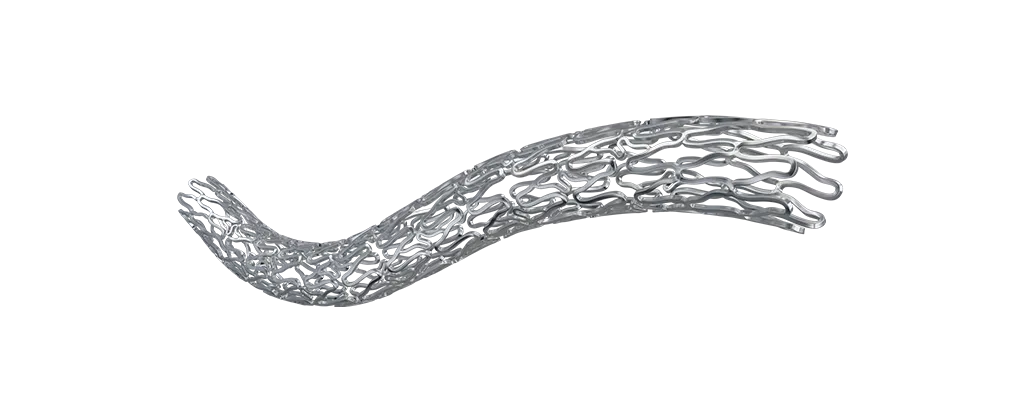
BioMime™ Morph Sirolimus-Eluting Coronary Stent System
A sirolimus-eluting coronary stent with an innovative tapered design. Developed to match the physiological anatomy of tapering vessels, it is intended for the treatment of long lesions without the need for multiple overlapping stents.
Key feature: tapered stent system
The anatomy of coronary arteries is often characterized by a gradual reduction in vessel diameter along its course. The tapered architecture of BioMime™ Morph is designed with this feature in mind and allows the stent to adapt to the natural profile of tapering vessels.
The use of a single long tapered stent may reduce the need for implantation of multiple overlapping stents, which is particularly important in the treatment of long lesions.
Design and biomechanics
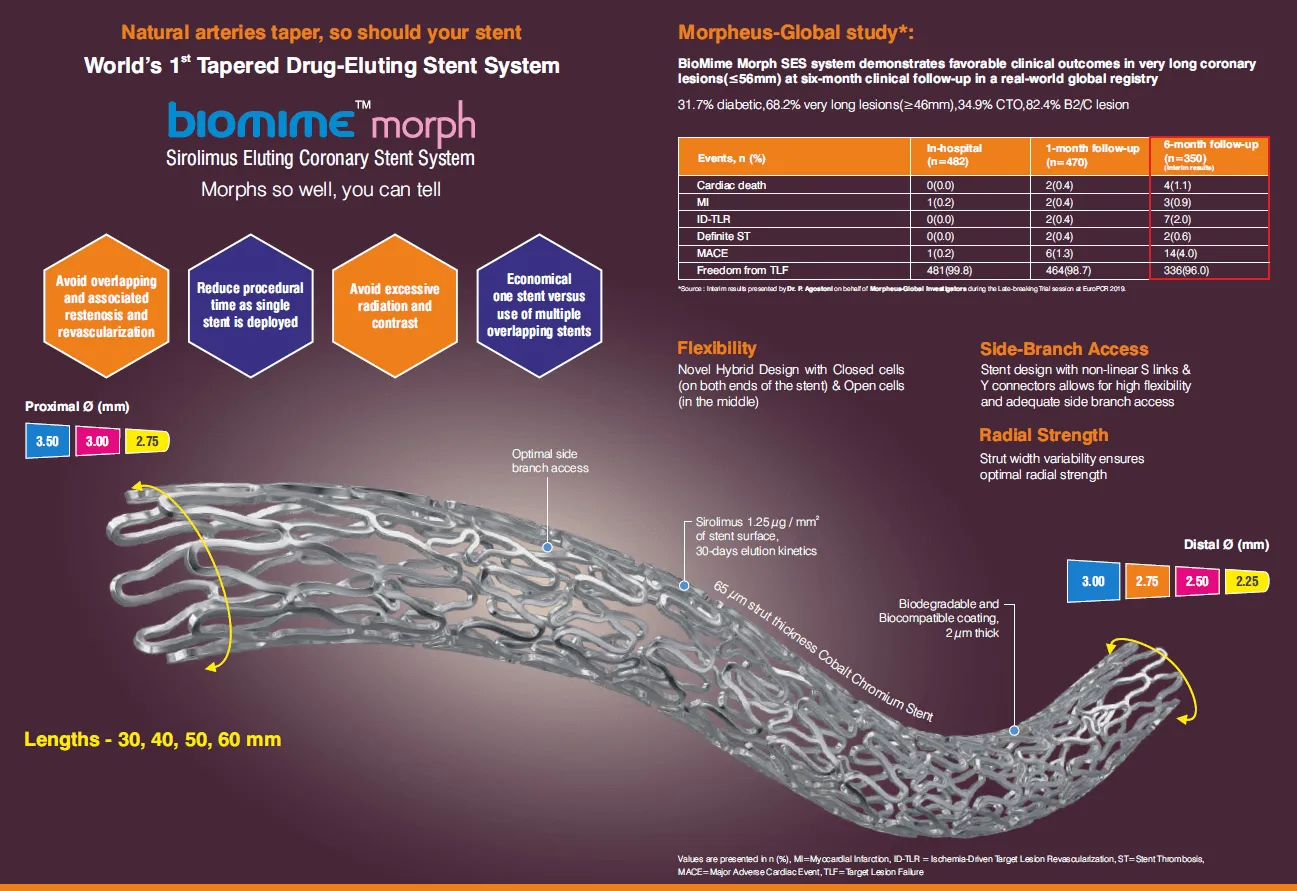
- Hybrid cell design: the combination of closed cells at the stent edges and open cells in the central section provides a balance between structural fixation, vessel wall support, and access to side branches.
- Structural flexibility: non-linear S-shaped links and Y-shaped connectors help the stent pass through tortuous and anatomically complex segments.
- Radial support: variable stent strut width is intended to provide vessel wall support along the length of the treated segment.
- Thin-profile scaffold: the use of L605 cobalt-chromium alloy enables thin struts while maintaining the required radial strength.
Drug coating
- Sirolimus: an antiproliferative drug whose release is intended to reduce the risk of neointimal hyperplasia and restenosis.
- Biodegradable polymer: the polymer matrix serves as a carrier for the drug substance and gradually degrades as the drug is released.
- Controlled release: the sirolimus release kinetics are designed to deliver the drug during the early post-implantation period, when vascular healing occurs.
Clinical data and safety
The clinical characteristics of BioMime™ Morph were evaluated in the Morpheus-Global study and other clinical data sources, if confirmed by the manufacturer’s documentation.
- TLF data: clinical materials may report freedom from target lesion failure (TLF). Such outcomes should be stated only with reference to the specific study, follow-up period, and patient population.
- MACE data: the rate of major adverse cardiac events (MACE) should be stated in connection with a specific study and assessment methodology.
- Use in complex lesions: use of the system in patients with diabetes, chronic total occlusions, and type B2/C lesions requires confirmation by clinical data and the manufacturer’s instructions.
- Radiopaque visualization: platinum-iridium markers help visualize the system during fluoroscopic positioning control.
Benefits for the clinic and physician
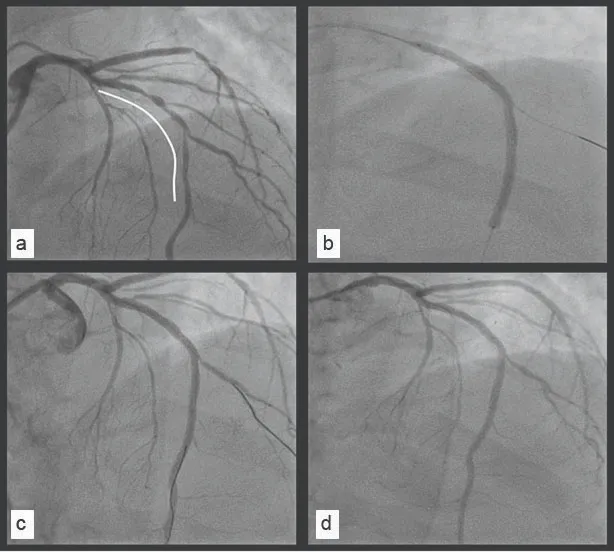
- The use of a single tapered stent may be beneficial in the treatment of long segments with a natural reduction in vessel diameter.
- Reducing the number of overlapping stents may simplify the procedure and decrease the amount of implanted metallic scaffold.
- The system design is intended to improve the predictability of stent positioning and deployment.
- Any potential reduction in procedure time, radiation exposure, or contrast media volume should be stated only when supported by clinical or procedural data.
Indications and areas of use
- Increasing the lumen diameter of coronary arteries in patients with symptomatic ischemic heart disease.
- Treatment of de novo lesions in native coronary arteries.
- Treatment of in-stent restenosis, if specified in the manufacturer’s instructions.
- Treatment of long lesions in vessels with a natural reduction in diameter.
Materials used
- L605 cobalt-chromium alloy: scaffold material that combines a thin strut profile with radial support.
- Platinum-iridium markers: used for fluoroscopic visualization of the system.
- Biodegradable polymer matrix: serves as a carrier for sirolimus and gradually degrades after performing its function.
- Hydrophilic coating of the delivery system: reduces friction and facilitates catheter advancement over the guidewire and through the vasculature.
System components
- Balloon-expandable cobalt-chromium coronary stent with a drug coating.
- Tapered balloon catheter delivery system, Rapid Exchange type.
- Size range for stent selection according to the diameter and length of the treated segment.
Certification and safety
- The device is sterilized with ethylene oxide (ETO) and supplied sterile, if confirmed by the manufacturer’s documentation.
- The system is intended for single use.
- CE marking and compliance with applicable medical device safety requirements should be stated in accordance with the current manufacturer’s documentation.
Related Products
Vascular Intervention

BioMime Aura™ Sirolimus-Eluting Coronary Stent System
A sirolimus-eluting coronary stent system with a biodegradable polymer coating. Designed for the treatment of complex coronary artery lesions, the system supports predictable stent deployment, high flexibility, and smooth intravascular navigation.

BioMime™ Branch Sirolimus Eluting Coronary Stent System
A coronary artery side-branch stent system with a sirolimus-based antiproliferative coating. Intended for the treatment of primary bifurcation lesions, the system is designed to support vessel lumen expansion and help reduce the risk of restenosis.
Evermine50™ Everolimus-Eluting Coronary Stent System
An everolimus-eluting coronary stent system intended to increase vessel lumen diameter in patients with symptomatic coronary artery disease. Designed for the treatment of both *de novo* and restenotic lesions in native coronary arteries.

Menox™ Liquid Embolic System
A non-adhesive liquid embolic system for preoperative embolization of cerebral arteriovenous malformations (AVMs). Designed to support controlled vascular occlusion and precise delivery during neurovascular embolization procedures.