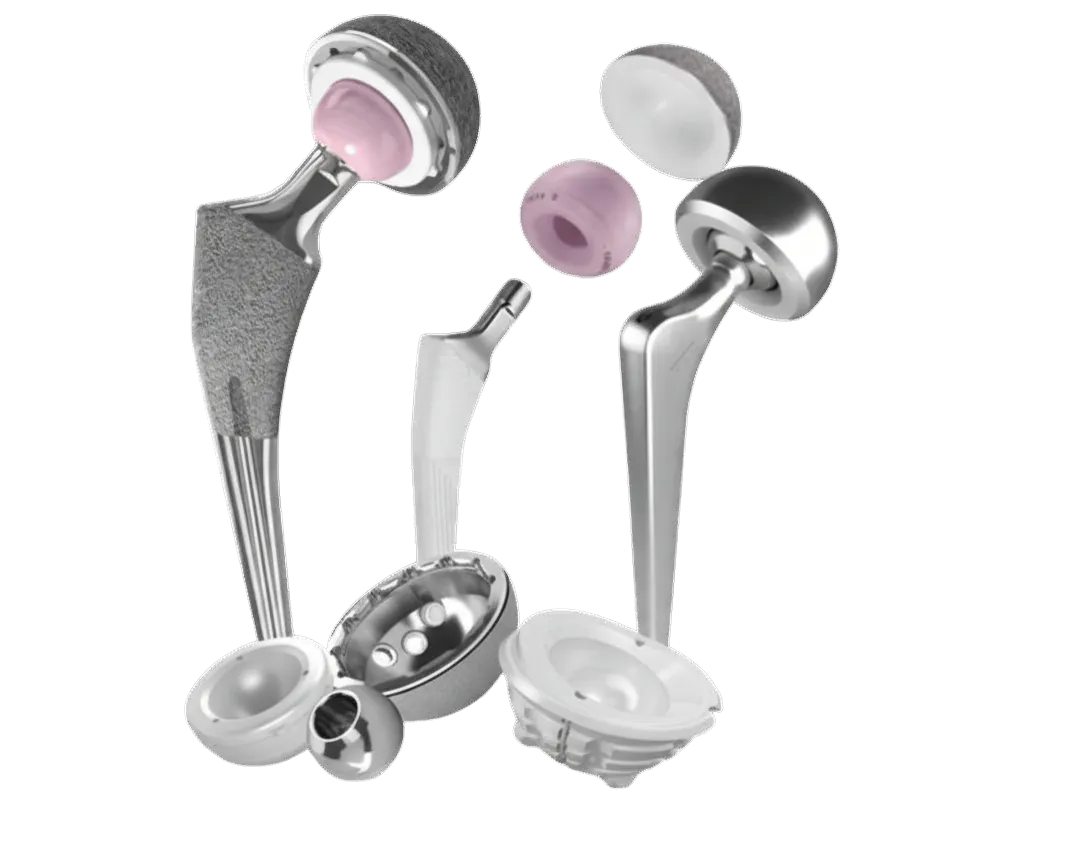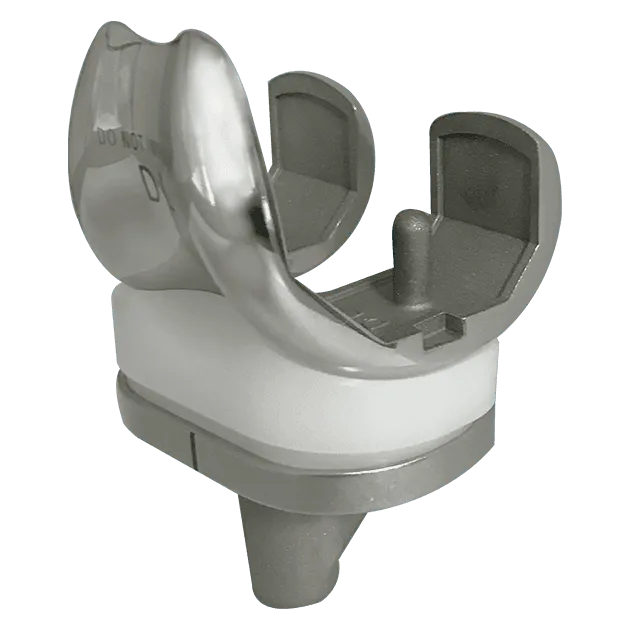
DESTIKNEE™ Total Knee Arthroplasty System
A cemented total knee arthroplasty system by Meril. Developed based on global patient anthropometric data, the system is designed to support anatomical knee biomechanics, high flexion range, and preservation of healthy bone tissue.
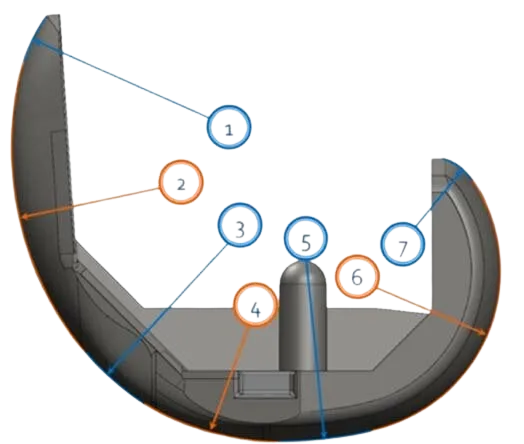
Key feature: multi-radius femoral component
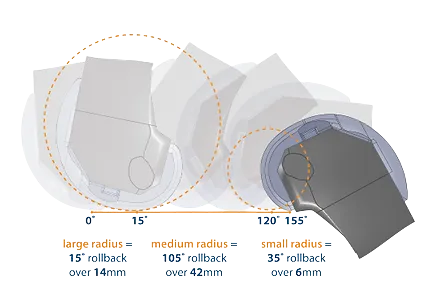
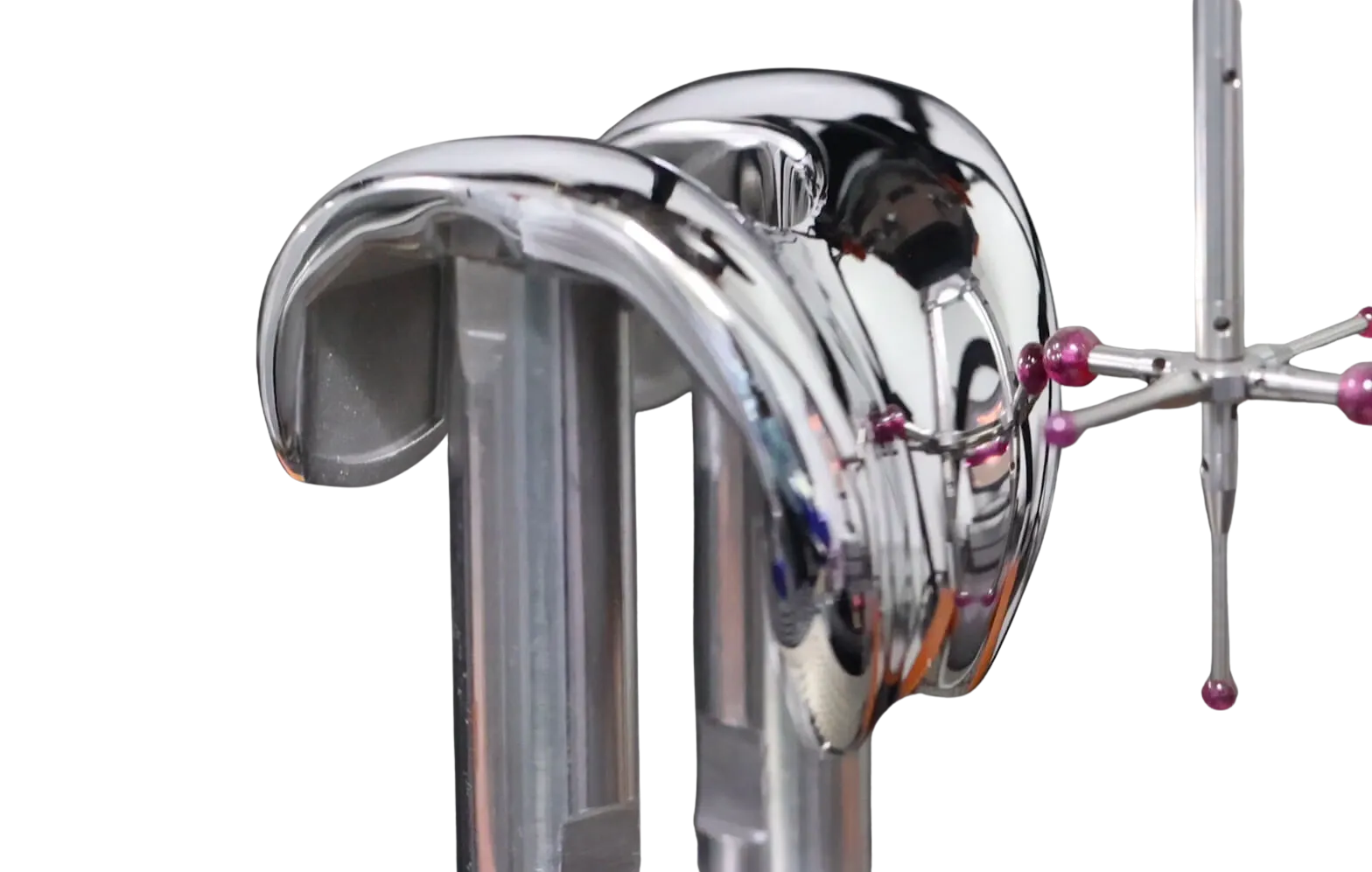
The multi-radius geometry of the DESTIKNEE™ femoral component is designed with consideration for the anatomy of the distal femur and knee joint biomechanics. The design is intended to support patellofemoral contact, a smooth transition during flexion, and controlled femoral rollback.
This design contributes to contact load distribution and stable joint function across the functional range of motion.
Biomechanics and functional capabilities
The implant design is intended to restore knee joint function and support the patient’s daily activity after arthroplasty.
- Deep flexion: an extended femoral component gliding surface supports an increased range of motion required for daily activities.
- Controlled rotation: the asymmetric post-cam mechanism is intended to support stability and rotational movement during flexion.
- Reduced contact loading: load distribution across the central area of the polyethylene insert helps reduce edge loading.
- Anatomical trochlear groove: the deepened trochlear groove, combined with a thin anterior flange, supports proper patellar tracking and function of the extensor mechanism.
Tibial component and insert fixation
- Multipoint peripheral fixation: the insert fixation mechanism with a reinforced locking contour is intended to reduce micromotion and minimize backside wear of the polyethylene insert.
- Optimized keel: the low-profile keel of the tibial component is designed for stable fixation in bone tissue.
- Polished tibial tray surface: the smooth tibial tray surface reduces friction at the interface with the polyethylene insert.
Bone-conserving design
The DESTIKNEE™ design includes features intended to preserve the patient’s native bone tissue during bone bed preparation.
- Low-profile intercondylar box: the design is intended to reduce the amount of bone resection.
- Thin anterior flange: helps reduce the amount of anterior femoral condyle resection.
- Anatomical component proportions: optimized anteroposterior and mediolateral dimensions help select the component according to the patient’s individual anatomy.
Size range and system modularity
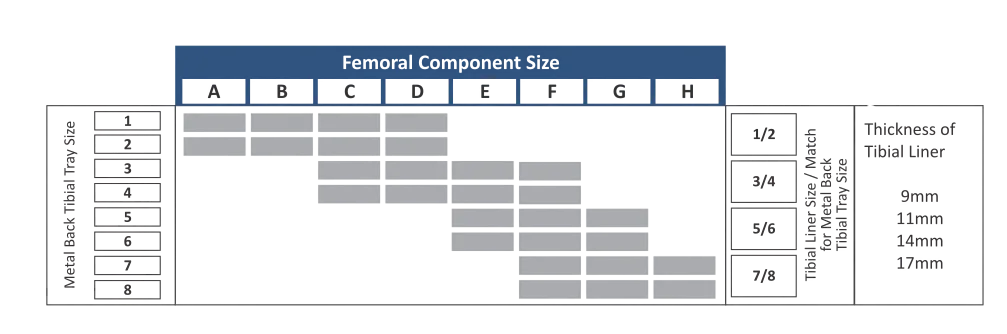
The system includes a component size range for implant selection according to the patient’s anatomy and surgical plan.
- Femoral and tibial components: options are available for the right and left knee joint.
- Modularity: the system allows compatible component sizes to be combined in cases of proportional differences between the femur and tibia, if specified in the manufacturer’s instructions.
- Patellar components: available in various diameters for selection according to the anatomy of the patellofemoral joint.
Materials used
The system materials are intended for use in orthopaedic surgery and should be used in accordance with the manufacturer’s instructions.
- Femoral component and tibial tray: cobalt-chromium-molybdenum alloy.
- Tibial inserts and patellar component: medical-grade ultra-high-molecular-weight polyethylene.
Indications for use
The DESTIKNEE™ system is intended for cemented total knee arthroplasty, including replacement of the articular surfaces of the distal femur and proximal tibia, in painful conditions and impaired knee joint function caused by:
- osteoarthritis;
- rheumatoid arthritis;
- post-traumatic arthritis.
System components
The arthroplasty system includes:
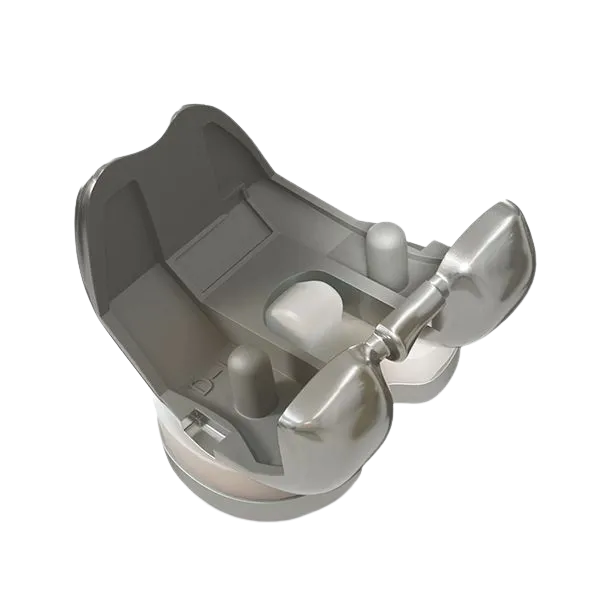
- femoral component, including posterior-stabilized and cruciate-retaining versions;
- tibial polyethylene insert;
- all-polyethylene tibial component;
- tibial tray for cemented fixation;
- patellar component;
- specialized surgical instrumentation for implantation.
Certification and manufacturer
- Manufacturer: Meril Healthcare Pvt. Ltd., India.
- Registration: the device is registered with the Ministry of Health of the Republic of Belarus. Information on CE certification, marketing authorization in the United States, and other regulatory statuses should be stated in accordance with current manufacturer documentation.
- Safety: components are supplied sterile and intended for single use, if confirmed by the manufacturer’s instructions.